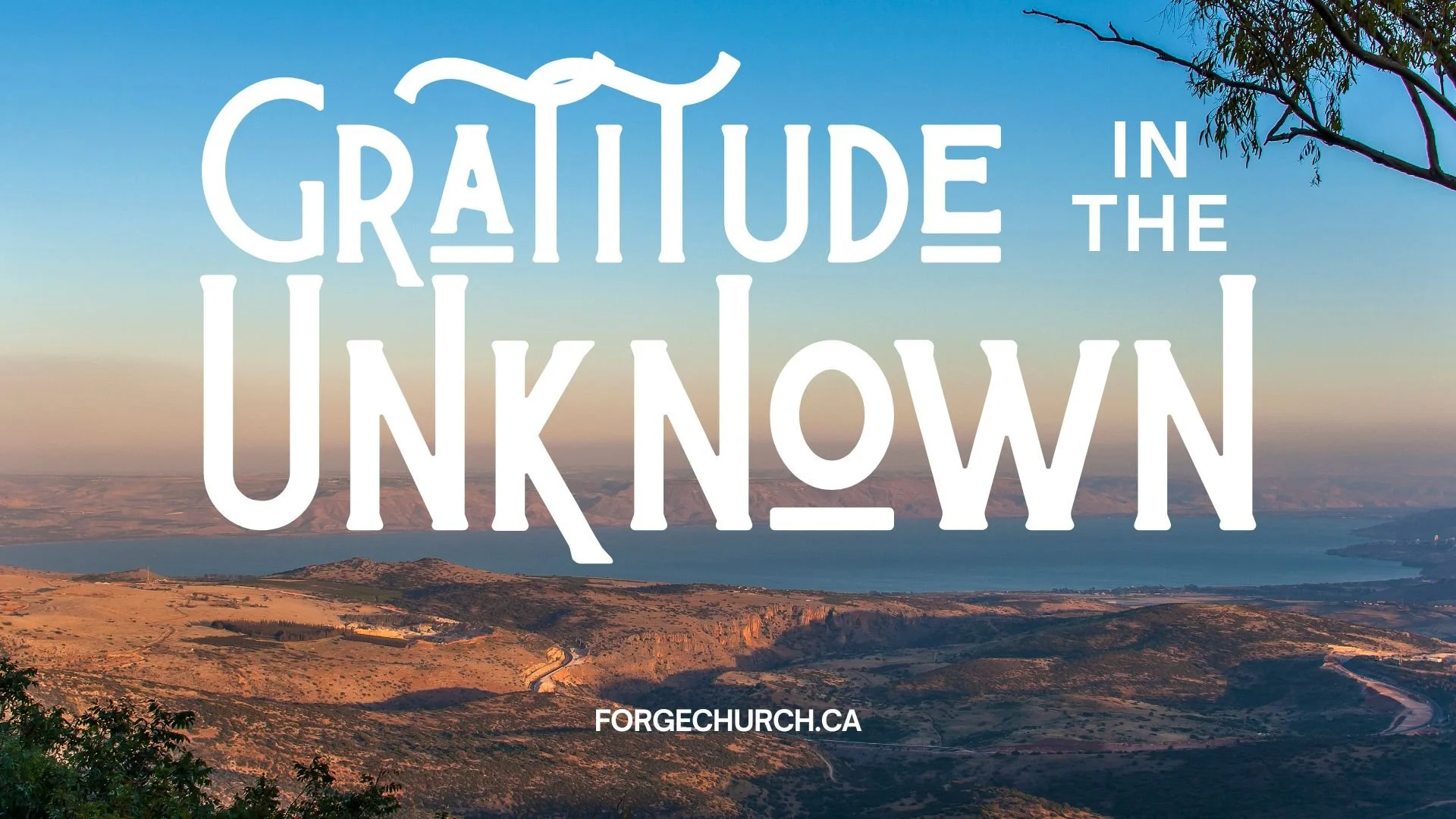
Gratitude in the Unknown
As we prepare for Thanksgiving this weekend, it can feel like a natural time of year to reflect on all the people, circumstances, and ways that we are thankful to God for His provision and activity in our lives. But, are we also thankful in the midst of difficulty and the unknown? Gratitude is a way of being that we can choose in any circumstance, even when it doesn’t feel natural. It is the practice of noticing what is good, beautiful, and true, and delighting in God as both the source and the giver of these gifts. 1 Thessalonians 5:16–18 encourages the Church to be people who,
Rejoice always, pray continually, [and] give thanks in all circumstances; for this is God’s will for you in Christ Jesus.
It is God’s will for us, to overflow with thanksgiving (Col 2:6–7), and to be practitioners of hope. However, as Walter Brueggeman notes in the prayer “From Parsimony to Abundance” from his book, Prayers of Joy, we often lean more towards a poverty mindset founded in fear. We fear the unknown and the impossible. We hold tightly to what is ours because we fear that we may lose it all. Brueggeman challenges the listener to instead,
Be practitioners of abounding loaves, ready for brokenness
Jesus models this for the disciples in Mark 6:30–44 when he invites them to provide an evening meal for 5000 men, plus women and children in a remote area near the Sea of Galilee. He tests their trust, and then their faith as he receives the minuscule offering of five loaves and two fish they surrender into his hands. In verse 41, Jesus takes the bread and the fish and gives thanks for the seemingly not enough. Then he breaks it and gives it back to them. As they receive from him, they are able to share with others, more than they could have imagined: abundance from surrender and trust.
Gratitude is a reminder that God is bigger than our problems, and there is truth, beauty, and goodness all around us in which we can delight. Gratitude is one of the gifts we can give away to others, just as the disciples handed out the loaves and fish. It is a marker of our identity as children of God, and it is an invitation to see the unknown and uncomfortable things of life from a different perspective.
What are you thankful for in the unknown and difficult spaces of your life?